Jewel-toned stripes sweep into a pointed triangle, then rise into a roomy hood for a bold, cozy layer. This page is a visual project guide; it does not yet provide a complete, independently verified pattern for the pictured construction.
A vivid scarf that becomes a hood
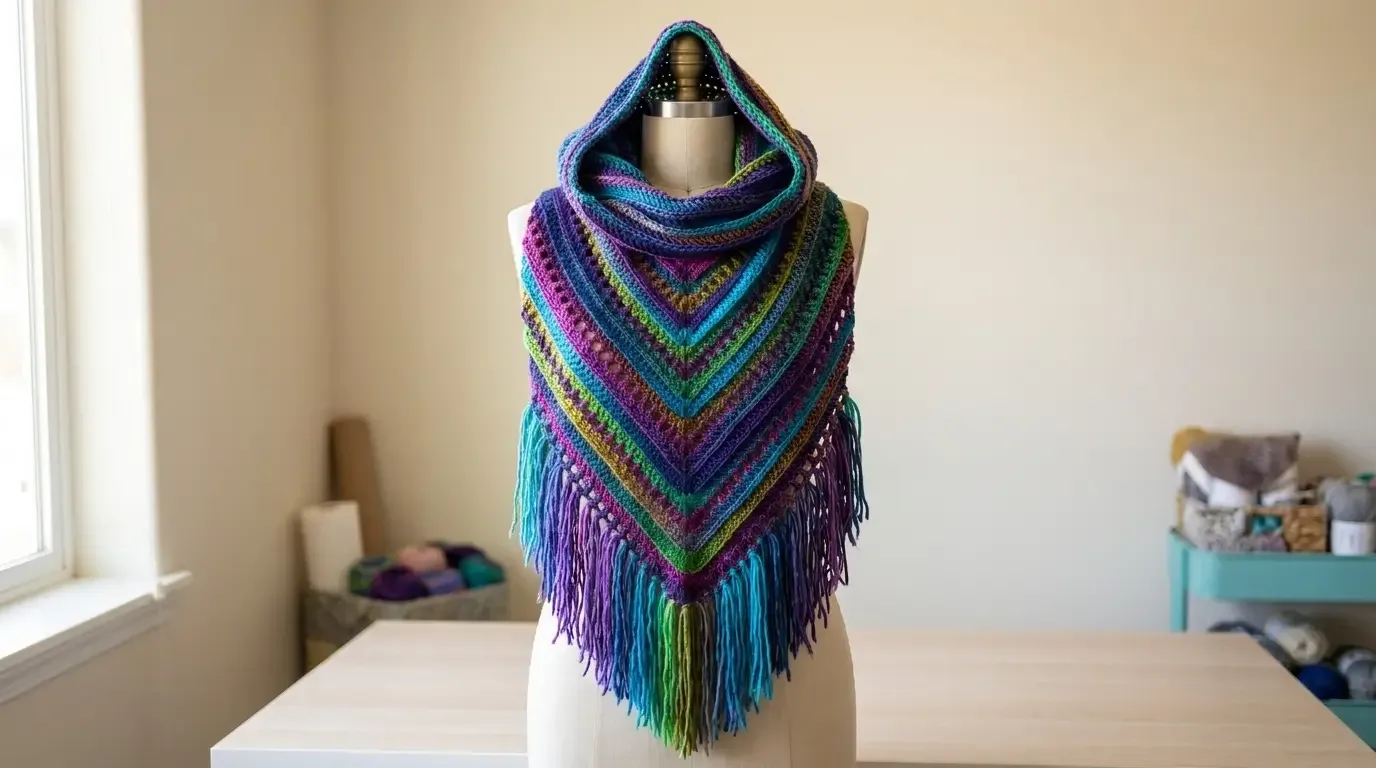
The Wild Oleander Hooded Scarf pairs a dramatic pointed triangle with a deep cowl that can be pulled up as a hood. In this colorful HookElla presentation, nested rows of purple, turquoise, green, magenta, and gold create a bright V-shaped landscape, while the long fringe makes the lower edges move with the fabric.
This page is a visual project guide, not a complete crochet pattern. It does not provide row-by-row instructions, stitch definitions, or the construction details needed to make the pictured accessory from start to finish.
Project details at a glance
The designer’s listing describes an intermediate crochet project using worsted/Aran #4 yarn and a 6 mm (J) hook. The listed size range runs from baby through teen-to-adult, with a shorter cowl modification also included. The Ravelry listing gives a broad yardage range of about 310–810 yards, depending on the selected size and version; check the pattern’s size-specific estimate before choosing yarn.
The finished silhouette is what makes this accessory distinctive: the pointed scarf front layers over the chest, the sides wrap around the neck, and the attached hood rises from the back. It can be styled as a snug hood or worn lower as a generous cowl.
Color and texture
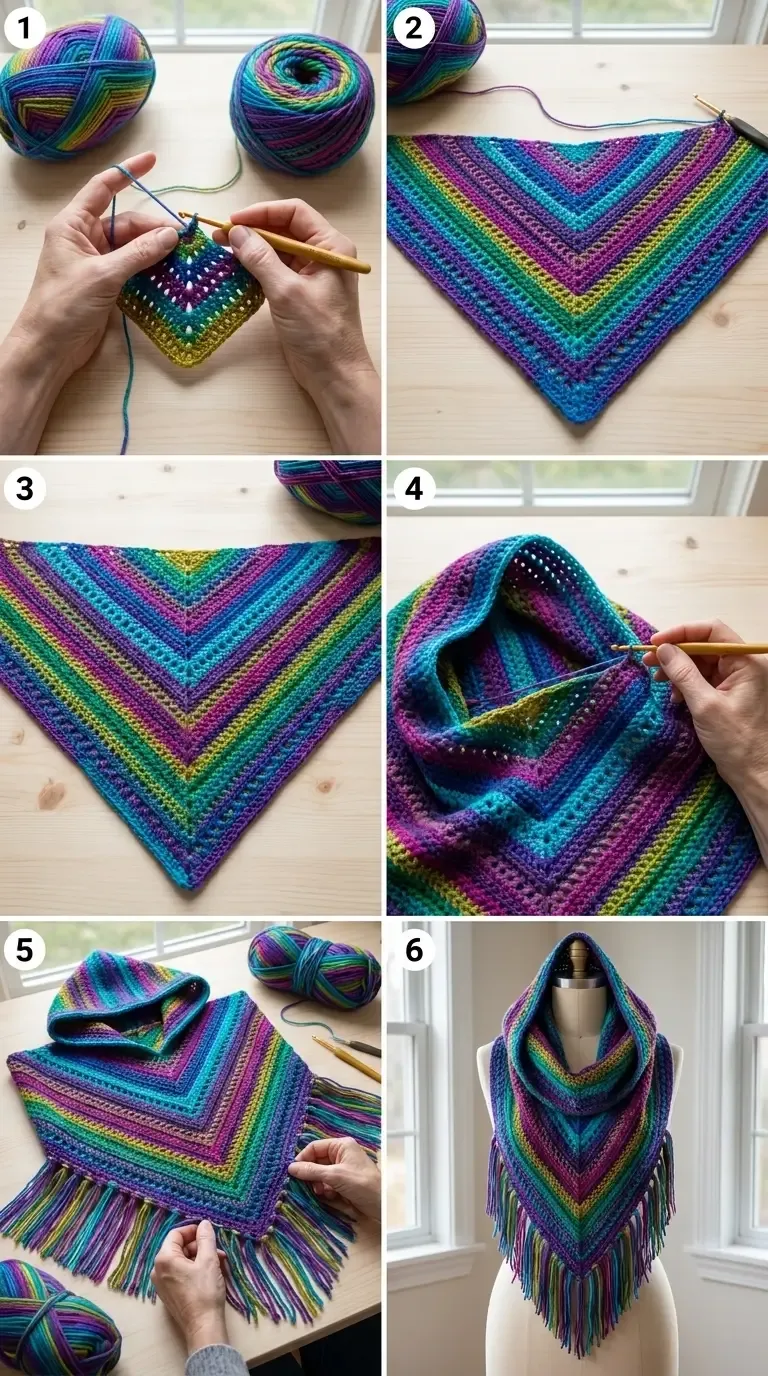
The supplied HookElla images show saturated, shifting jewel tones in closely spaced V rows. A long-gradient or self-striping yarn can carry color through the bands without frequent yarn changes, while a planned set of solid colors gives more control over where the purple, blue, green, berry, and gold sections meet.
Texture is central to the look. Raised rows and small open details catch the light differently, making each nested angle legible even when the colors blend. If choosing a different palette, keep enough contrast between neighboring shades so the chevrons remain visible. A solid or tonal version would emphasize the surface texture; a vivid gradient makes the V-shaped growth the main feature.
How the construction comes together
The scarf is made first, and the hood is added directly to it without fastening off. That continuous transition avoids a separate hood seam and keeps the accessory as one connected piece. The construction image shows the broad stages: establish the triangular scarf, continue the textured color bands, shape and form the hood from the scarf fabric, then decide whether to add fringe.
The exact stitch sequence and shaping counts belong to the designer’s paid pattern. Use the purchased instructions for the row order, special stitches, size-specific dimensions, and hood placement; this overview is not a substitute for those details.
Yarn planning and comfort
The public listings suggest Red Heart Unforgettable as a yarn option and specify #4 worsted/Aran weight. A similarly smooth, medium-weight yarn with good drape can be considered, but yarn substitutions change the fabric, dimensions, and yardage. Check the designer’s size measurements and yarn estimate, and make the recommended swatch from the pattern before committing to a substitute.
For a garment worn close to the face and neck, comfort matters as much as color. Choose a fiber that feels pleasant against the skin, and consider washing a small swatch according to the yarn label to see how it softens and drapes. A very stiff or heavy substitute may make the cowl less comfortable and the hood less flexible.
Fringe and finishing choices
Fringe is an optional feature in the designer’s description. The HookElla images show a generous multicolor fringe following the lower angled edges, echoing the shifting shades in the scarf. For a lighter, everyday version, the piece can be finished without fringe; if adding it, follow the designer’s guidance for length and placement so the edge hangs evenly.
Weave in ends securely and block only as recommended for the yarn and pattern. Support the piece while wet, avoid stretching the hood opening, and shape the scarf point and angled edges evenly. If you plan to wear the hood up often, keep the cowl comfortable around the neck rather than pulling it tight during finishing.
Explore more HookElla wearables
Browse the HookElla Wearables & Accessories collection for more crochet layers, or see the Lost in Time crochet shawl project guide for another richly textured triangular wrap.
Designer credit and complete pattern
The Wild Oleander Hooded Scarf is a copyrighted design by Andrea R. Williams / Wickedly Handmade. The designer’s pattern terms prohibit editing, copying, or redistribution of its instructions. HookElla is sharing this visual project guide only; the paid pattern remains with the designer. Find the complete instructions at the Wild Oleander Hooded Scarf Ravelry listing or the Wickedly Handmade shop page.
Helpful questions
Is the full Wild Oleander pattern included here?
No. This is a visual project guide and does not include the complete instructions needed to make the accessory.
What yarn and hook does the pattern call for?
The public listings specify worsted/Aran
How is the hooded scarf constructed?
The scarf is worked first. The hood is then added continuously without fastening off, creating one joined accessory rather than a separate hood sewn on afterward.
Is fringe required?
No. Fringe is optional in the designer’s description. The supplied HookElla version shows long multicolor fringe along the lower angled edges.